One Room.
One Family.
And a Court Decision That Changed a Nation.
“We walked to school past a bus we weren’t allowed to ride. Everything we got came after it was used by white schools.” — James “Sonny” Knott, former student
Not that long ago, on a quiet street in Hockessin, Delaware, Black children once gathered to learn in a one-room schoolhouse that would help break the back of segregation in America. Today, Hockessin Colored School #107C still stands as a symbol of courage, equality, and unfinished work.
The One-Room School That Helped Change America
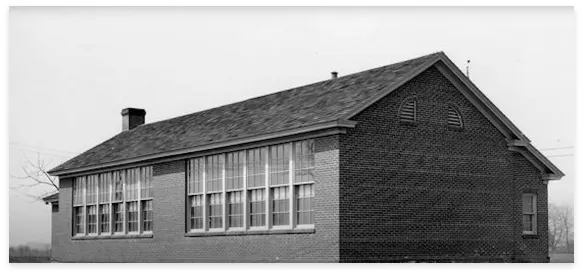
Hockessin Colored School #107C opened in 1920, built by Pierre S. DuPont to serve Black children in an era when segregation was the law in Delaware. The school had one teacher, one classroom, and few resources. But it gave children the foundation to dream bigger than the world allowed at the time.
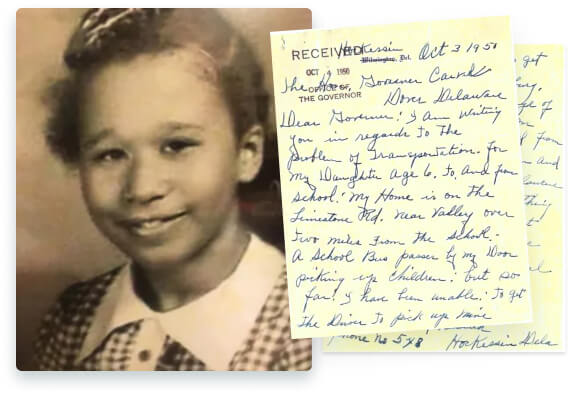
In 1951, Hockessin mother Sarah Bulah asked the state if her daughter, Shirley Barbara, could please be picked up by the school bus that passed their house on the way to the whites-only school just down the road. A non-reponse to that question turned into a lawsuit—Bulah v. Gebhart—which was ultimately bundled with cases in four other places (VA, KS, DC, SC) and became part of the United States Supreme Court’s historic 1954 decision in Brown v. Board of Education.
The Bulah case was uniquely different from all the other cases in Brown v. Board of Education. A Delaware court had already ruled in favor of the Black plaintiffs, making it the only state in the nation where a judge ordered integration before the case reached the Supreme Court. That ruling came from Chancellor Collins J. Seitz, who said plainly: separate was not equal. This one-room school, and Chancellor Seitz’s ruling, was a central part of a turning point in American history.
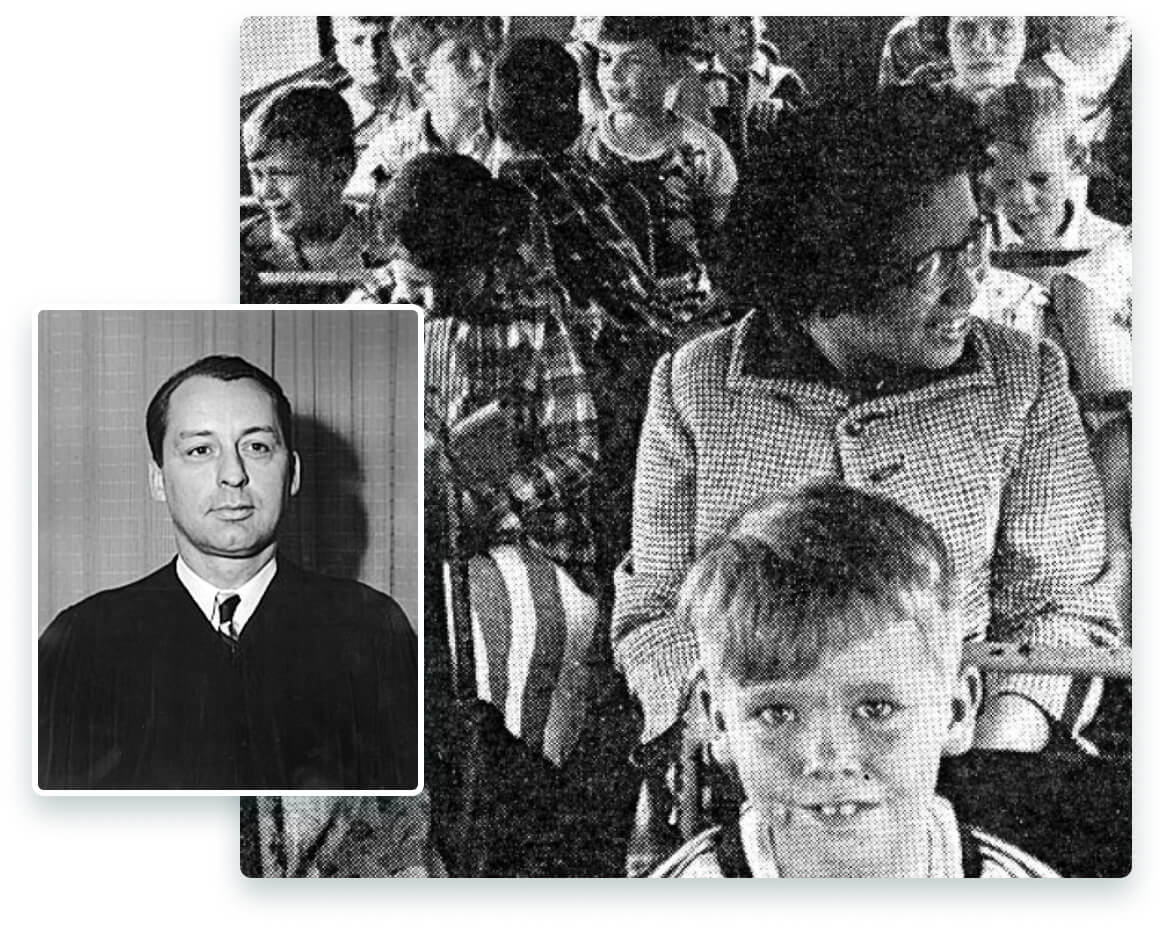
“I just wanted her to be treated fairly. I didn’t think it would go this far.”
— Sarah Bulah, mother of Shirley Barbara
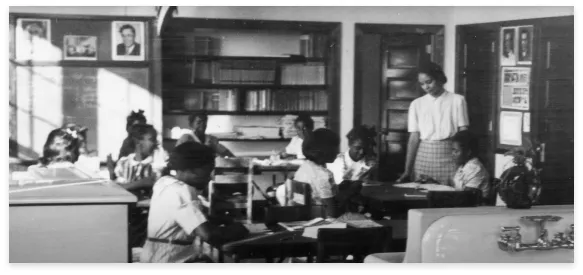
What 107C Was Like THEN:
- Grades 1–6 were taught by a single teacher
- No plumbing, no heat, no cafeteria—just chalk, desks, and determination.
- Children walked miles to class while white children rode buses past them.
- Books and supplies came secondhand, if they came at all.
“Coming back to this building after all these years… it still feels like home.”
— Former student at reopening ceremony
What 107C Is Like NOW:
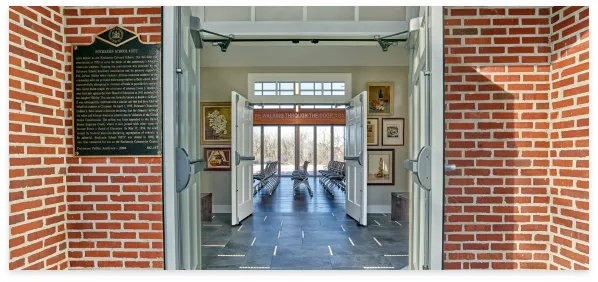
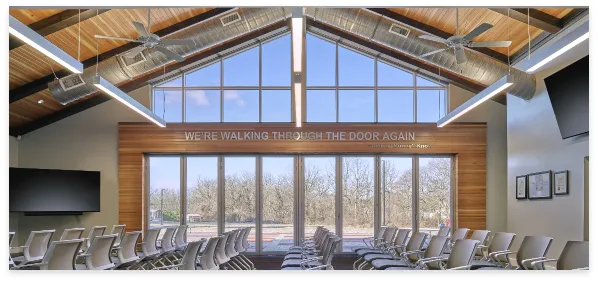
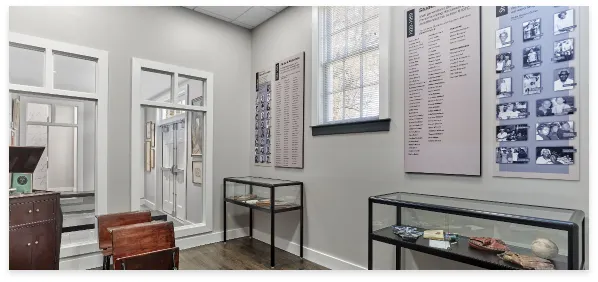
The building has been carefully reimagined into a Center for Diversity, Inclusion & Social Equity focusing on Social Infrastructure Innovation.
Hockessin Colored School #107C is now a Brown v. Board of Education National Historical Park and, as of 2020, is part of the New Castle County Parks system.
Today Hockessin Colored School #107C serves as a place for education, inspiration for greater community collaboration, reflection, and a safe place for civic dialogue on contemporary social issues.
#107C is managed and optimized by the Friends of Hockessin Colored School #107 Inc., a nonprofit dedicated to preserving its legacy and using it to build a future of inclusive prosperity.
Visit The SchoolWhy It Matters Today: 107C is NOT a museum
This isn’t just history—it’s a reminder.
Hockessin Colored School #107C stands for what happens when ordinary people have the courage to demand justice. When families take a stand no matter how unpopular it might be. When children walk into a classroom and into history.
And it reminds us how far we still must go. Educational inequality hasn’t disappeared—it’s just taken different forms. That’s why this building deserved/needed to be more than a museum, but a place of measurable impact.
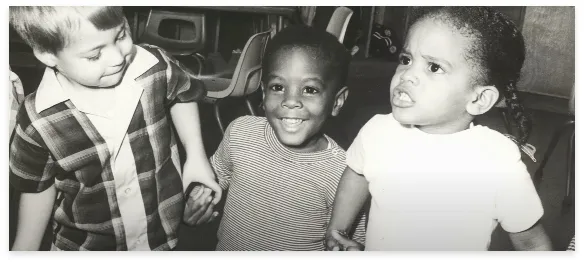
Hockessin Colored School #107C is a place where today’s challenges meet yesterday’s lessons.
Our Mission:
The mission of the Friends of Hockessin Colored School #107C is simple and urgent:
- Protect and preserve this historic building.
- Educate students and the public about its place in the story of American civil rights.
- Create programs that explore equity, opportunity, and justice in schools today.
- Build community through conversation, reflection, and shared learning.
What We Offer:
- Field trips to the National Park and especially school group tours
- Public events, programs, corporate gatherings, and film/arts nights
- Teacher trainings and curriculum partnerships in social studies, history, and leadership
- Youth leadership workshops and community service
- Exhibits on how 107C helped to end segregation in Delaware public schools, monumental legal history, and how to stimulate more education equity
- Public meeting spaces for all groups
Your Gift Makes a Difference
Your support helps us keep the doors open and the story alive.
| Your Gift | Your Impact |
|---|---|
| $50 | Provides materials for a classroom visit |
| $100 | Helps fund a docent to lead school tours |
| $250 | Supports preservation of the building |
| $1,000 | Funds new programming or curriculum |
| $5,000+ | Expands educational outreach across the state |
Every donation helps. No gift is too small.
How You Can Help
Give: Your donation keeps this landmark alive and relevant.
Make a GiftVolunteer: From leading tours to helping with events, your time matters.
Join Our Volunteer TeamSpread the Word: Tell your school, your church, your community.